
As we enter 2026, musculoskeletal disorders (MSDs) stubbornly remain a leading driver of employer healthcare and injury-related costs. With medical costs projected to rise by 8% to 9% in 2026, further financial exposure will be greatly amplified. 1, 2
What’s evolved in 2025 is the medical community’s understanding from rigorous science. Computer-intensive work and “prolonged unmanaged sitting” are no longer considered simply “inactive” behaviors but are now classified as biologically hazardous exposures when left unmitigated.
Large peer-reviewed studies have established a clear dose–response relationship between uninterrupted sitting and increased colorectal, breast, and lung cancer incidence—independent of leisure-time exercise. 3-7
This distinction is critical for safety professionals. While neutral posture behaviors help reduce MSD risk, neutral posture does not in any way mitigate the newly understood carcinogenic effects of prolonged unmanaged sitting. In short, “sitting well” still carries clear and present increased cancer risk and the experts explain that it’s significant.
Given the preventable human costs, healthcare over-consumption, disability claims, and productivity losses associated with preventable cancers, the financial and human costs to employers are substantial and, left unmitigated, are growing. 8
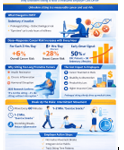
During our brief time together here, your intrepid author will review landmark 2025 evidence, the biological mechanisms behind sedentary risk, and the medical consensus that intermittent movement—not just equipment and best practice neutral posture behaviors alone—must become an important part of an overall risk prevention strategy (see infographic below).
Unmanaged Static Postures as a Carcinogenic Risk Factor (2025)
Ever increasing workload demands and the expansion of hybrid and remote work has driven daily screen exposure to historic highs. 9 Medical researchers now describe prolonged static postures as a distinct physiological state, separate from lack of exercise, that promotes metabolic dysfunction, chronic inflammation, and oncogenic signaling. 3, 10
Crucially, 2025 research confirmed sedentary behavior as an independent predictor of cancer incidence and mortality, even among individuals meeting or exceeding weekly exercise guidelines. 4
Dose–Response Evidence (2025)
- Overall Cancer Risk: A July 2025 cohort study of women in Cancer Causes & Control found that every 2-hour increase in unmanaged daily sitting time raised overall cancer incidence by 6%. 4 Note: A separate 2020 peer-reviewed study, equally including 1,156,400 men and women in U.S., U.K., Denmark, Norway, Canada, Spain, Japan, and Australia, reported each 2-hour incremental increase in unmanaged sitting raised overall cancer incidence by 5%-8% so we'll conservatively summarize these studies as 6%. 15
- Breast Cancer: Data from the Sister Study Cohort showed women sitting ≥8 hours/day had a 28% higher risk of postmenopausal breast cancer versus more active counterparts. 5
- Early-Onset Colorectal Cancer (CRC): Findings presented at the 2025 ASCO Gastrointestinal Cancers Symposium reported that about 50% of CRC patients under age 50 exhibited highly sedentary lifestyles, implicating static work as a contributing factor to early-onset disease. 6
Biological Mechanisms: Why Stillness Accelerates Tumor Growth (2025)
By 2025, medical research clarified the mechanistic links between sedentary work and cancer biology:
- Metabolic Dysfunction: Reduced skeletal-muscle glucose uptake and insulin resistance. 3, 7
- Chronic Inflammation: Elevated CRP and inflammatory cytokines associated with DNA damage and mutation. 10
- Hormonal Imbalance: Altered estrogen metabolism in sedentary women, increasing breast cancer susceptibility. 5
- The Continuity Hazard: Experts at MD Anderson , the #1 rated Cancer Research Hospital System in the U.S., state that the unbroken nature of sitting is the primary problem, as it prevents our bodies from naturally "clearing" pro-inflammatory markers. 11
The 2025 Behavioral Rx: Building on Ergonomic Equipment with Movement and Active Stretching
A defining conclusion of 2025 research is that gym attendance alone cannot offset an 8-hour static workday. 4, 12 Despite widespread deployment of highly-adjustable ergonomic chairs and sit–stand desks, MSDs and chronic disease trends remain stubbornly high—confirming that equipment and training without behavior change is insufficient. 1, 9
1 to 2 minute movement breaks each hour—as a practical, scalable intervention that improves metabolic and inflammatory profiles. 12, 13

- The 60-Minute Reset: Experts at MD Anderson now recommend interrupting static postures every 60 minutes to "restart" the metabolic clock. 11
- Cancer-Inhibiting Movement: A 2025 pre-clinical study suggests voluntary stretching may rival vigorous running in suppressing tumor growth pathways by modifying plasma protein signaling and reducing inflammation. 13
Studies and Sources Referenced Above
- Oakman, J., et al. (2025). Work-related musculoskeletal disorders and digitalization: Past adoption, current utilization, and future concerns. Applied Ergonomics.
- PwC Health Research Institute. (2025). Medical cost trend: Behind the numbers 2026.
- Holtermann, A., et al. (2025). Occupational physical activity and incidence and mortality of 14 cancers in 404,249 adults. Journal of Nature.
- Stamatakis, E., et al. (2025). Sitting time and risk of cancer incidence and mortality. Springer Nature.
- Dallal, C. M., et al. (2025). Sedentary time and breast cancer risk in the Sister Study cohort. Journal of the National Cancer Institute.
- J Clin Oncol (2025). Nationwide analysis of Medicare expenditure and utilization of EGFR inhibitors from 2018-2022. American Society of Clinical Oncology.
- Zhang, X., et al. (2025). Lifestyle factors and colorectal cancer prediction: A nomogram-based model. BMC Cancer.
- CDC (2025). Evidence of Impact for Workplace Health Promotion.
- Syst Rev. (2025). Barriers and facilitators impacting the implementation of digital interventions targeted at mental health and musculoskeletal disorders in the workplace: a scoping review protocol. National Library of Medicine
- Mayo Clinic. (2025). What are the risks of sitting too much?
- MD Anderson Cancer Center. (2025). Can sitting for too long really increase your cancer risk?
- Lee, I.-M., et al. (2025). Physical activity, sedentary behaviour and colorectal cancer risk. Medicine & Science in Sports & Exercise.
- Betof Warner, A., et al. (2025). Stretching, inflammation, and tumor suppression in pre-clinical models. Cell Metabolism.
- Rou Yi Soong1; Chen Ee Low1; Vanessa Ong1 et al (2025) Daily physical activity, even at light intensities, linked to lower cancer risk. National Institute of Health – National Cancer Institute.
- Zhao R, Bu W, Chen Y, Chen X (2020, aligning with reference #4 above) The Dose-Response Associations of Sedentary Time with Chronic Diseases and the Risk for All-Cause Mortality Affected by Different Health Status: A Systematic Review and Meta-Analysis. The Journal of Nutrition, Health and Aging.
Summary Infographic (Click on infographic to download PDF)

“Sitting is the New Smoking” – Medical Community Subject Matter Experts
Medical subject matter experts have been increasingly saying this phrase: “Sitting is the New Smoking” over recent years.
The phrase has now been used by subject matter experts in countless articles and papers and is growing rapidly in use (e.g. American Journal of Public Health, British Journal of General Practice, Journal of Cardiovascular Medicine, Journal of Environmental and Occupational Health Policy, Lewis & Clark Law Review, Diabetes, Annals of Internal Medicine, Mayo Clinic, MD Anderson Cancer Research Hospital System, American Bar Association, and more). We note the legal profession’s already-rooted interest.
For much of the 20th century, cigarettes were not only socially accepted but were medically endorsed and routinely prescribed to relieve stress, improve concentration, and calm the nerves.
It took decades of rigorous epidemiology to overturn that belief and establish smoking as a carcinogenic exposure with clear dose–response risk.
A similar inflection point has now arrived for prolonged unmanaged sitting. Once viewed as a neutral or even unavoidable byproduct of modern work, extended, uninterrupted sitting is firmly recognized by medical science as a biologically harmful exposure, independently associated with cancer, cardiometabolic disease, and premature mortality.
As with smoking, the danger is not merely the presence of the behavior, but its duration and continuity—making prolonged unmanaged sitting a risk factor that can no longer be ignored by employers, normalized, or designed around.
The 2026 Behavioral Rx Imperative
Recent medical research from 2025 emphasizes the critical health imperative for knowledge workers (people using computers for work) to manage their working time by at least changing posture and, at best, stretching hourly.
2025 Studies confirm that prolonged unmanaged sitting significantly increases the risk of serious health issues, including certain cancers, obesity, diabetes, and cardiovascular disease.
The overwhelming medical consensus, along with many government regulations, recommend or mandate incorporating short movement or stretching breaks at least every hour to mitigate these risks and improve overall health, well-being and productivity.
Traditional methods, however, like one-off training sessions are largely ineffective for long-term adherence. The key to a sustainable solution lies in applying time-tested principles from Psychology and Applied Behavioral Analysis to help employees develop these actions into automatic habits.
- Reduced fatigue rates, discomfort, MSDs, health risks and healthcare costs.
- Improved focus, energy, and overall productivity.
- A more comfortable, satisfied, engaged and resilient workforce.